
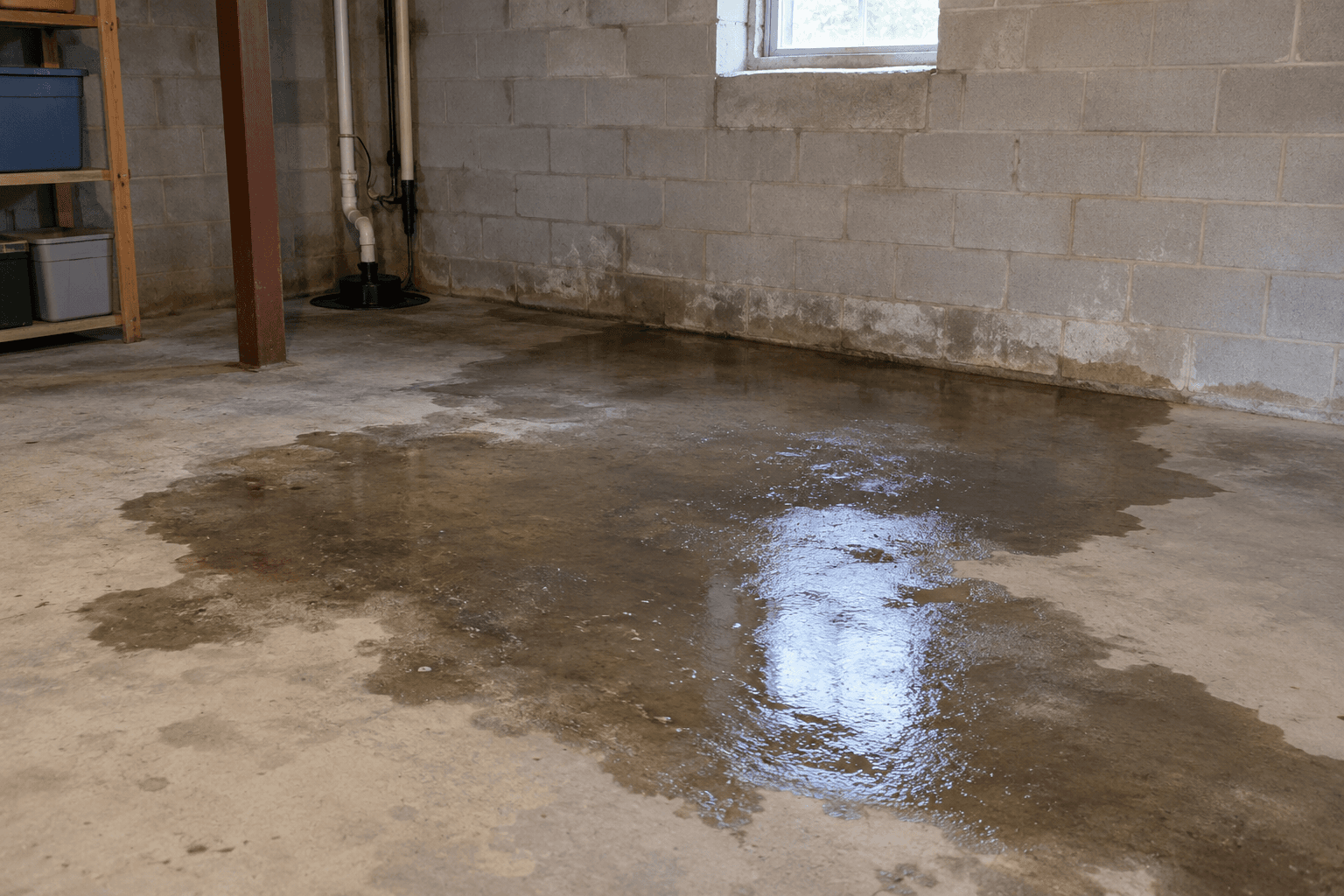
Basement water damage starts with finding out where the water is coming from. Rainwater moving toward the foundation calls for a different fix than a leaking pipe. Before paying for waterproofing or drainage work, look at when the water appears, where it starts, and whether you are dealing with a damp area or standing water. A basement can also be damp from humid air or condensation without a leak, but water entering through the foundation, floor, or plumbing needs a different response.
Why water gets into basements
There are four common situations:
- Water from outside: Rainwater can collect beside the foundation when gutters are clogged, downspouts are too short, or the ground slopes toward the house. It may then seep through walls, joints, or the floor. The U.S. Department of Energy explains that roof runoff can quickly saturate soil around a foundation when it is not carried away.
- Water from pipes: A leaking supply pipe, drain, water heater, or washing machine can wet one area regardless of the weather.
- Water from a sewer backup: Water rising from a floor drain or plumbing fixture may be a sewer backup. EPA notes that sewer overflows can back up into homes and threaten public health. Do not treat suspected sewage as ordinary rainwater seepage.
- A damp basement: Humid air can condense on cold walls or pipes even when no liquid water is entering. A musty smell, peeling paint, staining, or damp boxes can be clues. EPA guidance identifies leaks, seepage through basement floors, and condensation as distinct sources of indoor moisture.
How to keep water out
Start with the source you can identify. If rain is the trigger, make sure gutters carry water to downspouts and that the discharge moves away from the foundation. Check whether the ground directs water toward or away from the house. If a pipe or appliance is leaking, stopping that leak matters more than coating the nearby wall. EPA recommends maintaining gutters and keeping the ground sloped away from the foundation.
For condensation, lowering indoor humidity and drying damp surfaces can help. EPA recommends keeping indoor relative humidity below 60%, ideally between 30% and 50%; a dehumidifier can help where needed.
If water keeps coming in where the wall meets the floor or through the floor itself, start by finding the source.
Start with the simplest fix that matches the problem:
1. Clean gutters, extend downspouts, and make sure the ground slopes away from the house. 2. Repair a leaking pipe, appliance, or a small foundation crack. 3. Install an interior drain and sump pump if water keeps entering through the wall-floor joint or slab. 4. Consider exterior drainage or foundation waterproofing if the problem keeps coming back or is severe.
Health concerns from a damp basement
Dampness creates conditions in which mold can grow. Mold exposure does not affect everyone the same way, but CDC reports links between damp or moldy indoor environments and symptoms such as coughing, wheezing, and irritation; exposure may worsen asthma in people who have it. A damp basement is therefore more than a cosmetic issue, especially if moisture persists or keeps returning.
Not every wet wall means there is mold, and a stain alone does not show how much exposure someone has had. The practical priority is to stop the water and dry what got wet. Painting over a damp surface may hide a mark without changing the conditions that caused it.
What basement waterproofing costs
The price depends on the cause and the work required. HomeGuide's 2026 national cost guide gives these broad installed-cost ranges:
- Regrading around a house: $1,000 to $5,000.
- Sump pump installation: $600 to $2,500 or more.
- Interior perimeter drain: $4,000 to $17,000.
- Complete interior waterproofing work: $6,000 to $12,000 on average.
- Exterior waterproofing work: $10,000 to $18,000 on average.
These ranges are not Maple Heights or Ohio quotes. They also overlap: a complete interior system may already include a drain and pump, so the figures should not simply be added together. Access, basement size, foundation type, damage, and the amount of excavation can change the total. The least expensive-looking fix is not necessarily the least costly if it leaves the water source untouched.
The main question is where the water is coming from: outside, a pipe, a sewer backup, or indoor humidity. Find the source first. Then choose the fix that matches it.